China Top PVC Wall Panel Benefits and Applications Explained
PVC wall panels have gained immense popularity in recent years, transforming interiors across various sectors. According to the latest market report by Grand View Research, the global PVC wall panel market is expected to reach USD 9.2 billion by 2026, with a compound annual growth rate (CAGR) of 8.3%. This growth reflects the increasing demand for lightweight, moisture-resistant, and durable wall solutions.
The benefits of PVC wall panels are manifold. Their aesthetic appeal and versatile designs cater to both residential and commercial applications. They are particularly favored in high-humidity areas like bathrooms and kitchens. Additionally, PVC wall panels are often more cost-effective than traditional materials. However, the environmental impact of PVC production raises questions, prompting a need for sustainable practices in the industry.
While PVC wall panels offer significant advantages, it is essential to consider potential downsides. Issues like off-gassing and the long-term durability of color and finish can affect their value. Focusing on quality and sourcing from reliable manufacturers can mitigate these concerns, ensuring that PVC wall panels meet the expectations of consumers and businesses alike.
Benefits of PVC Wall Panels in China: An Overview
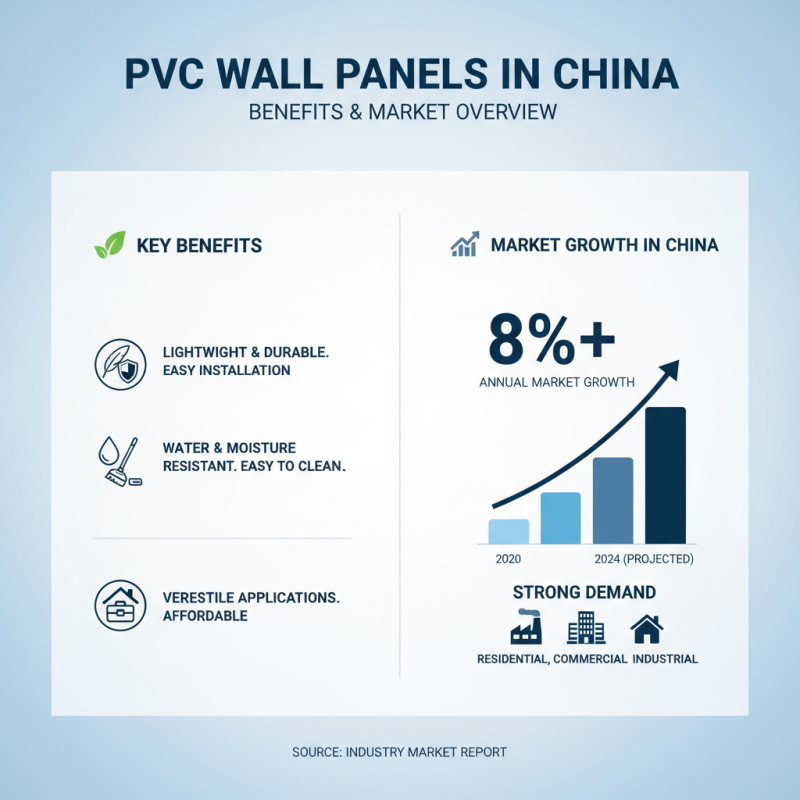
PVC wall panels are gaining popularity in China due to their numerous benefits and versatile applications. These panels are lightweight and durable, making installation easier compared to traditional materials. According to a market report, the PVC wall panel market in China is projected to grow by over 8% annually, showcasing a strong demand across various sectors.
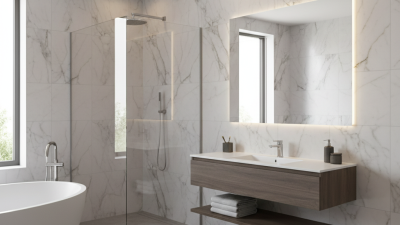
One major advantage of PVC wall panels is their moisture resistance. This quality makes them ideal for humid environments such as bathrooms and kitchens. They are also easy to clean and maintain, which boosts their appeal for both residential and commercial uses. In addition, PVC panels are available in a variety of designs. Homeowners and businesses can choose from countless colors and textures to match their aesthetic preferences.
Tips: When selecting PVC wall panels, consider the thickness and quality. Thicker panels typically provide better insulation and durability. Additionally, ensure proper installation to avoid any gaps that could lead to moisture issues. Despite their benefits, some argue that PVC panels may not have the same timeless appeal as natural materials. Evaluating the long-term implications is essential before making a decision.
Durability and Longevity of PVC Wall Panels
PVC wall panels have gained popularity due to their impressive durability and longevity. According to the 2023 Global Plastic Panel Market Report, PVC panels can last over 20 years with proper care. This resilience is primarily attributed to their resistance to moisture, mold, and decay, making them ideal for high-humidity environments such as bathrooms and kitchens.
Another critical advantage of PVC wall panels is their ease of maintenance. A simple wipe with a damp cloth can keep them looking new. Unlike traditional materials, they do not require painting or sealing, reducing time and cost. Reports from industry experts indicate that the lifecycle cost of PVC panels is significantly lower than that of wood or drywall, especially in commercial settings. However, it's essential to choose high-quality panels to avoid warping or fading.
Although PVC panels offer many benefits, they are not without potential drawbacks. The impact of UV exposure can sometimes lead to discoloration over time. Additionally, some applications may require additional reinforcement behind the panels, especially in high-traffic areas. Awareness of these factors is crucial for long-term planning and maintenance. Understanding these nuances ensures that the advantages of PVC wall panels are fully realized in their respective applications.
Aesthetic Versatility: Design Options for PVC Wall Panels
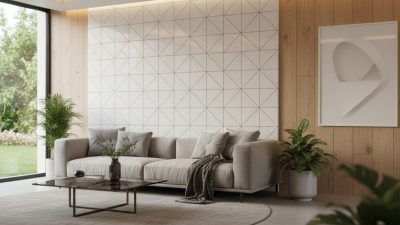
PVC wall panels offer remarkable aesthetic versatility, making them a preferred choice for various interior applications. With a plethora of design options, these panels enable homeowners and designers to create unique environments. According to a recent industry report, the global PVC wall panel market is expected to grow significantly, driven by innovative designs and increasing demand for easy maintenance solutions.
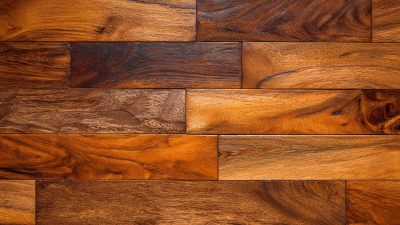
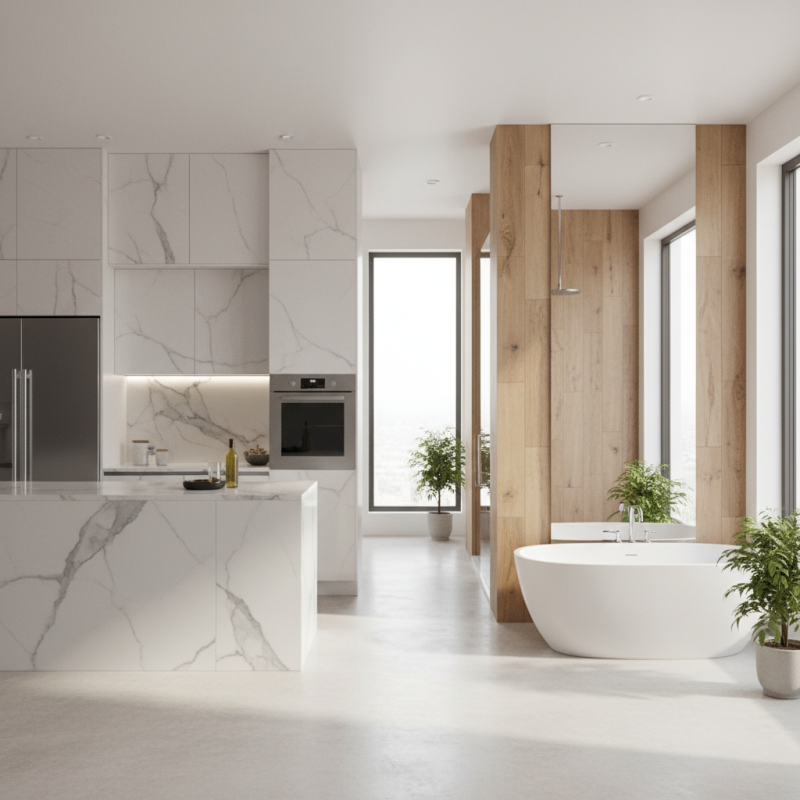
The artistic potential of PVC wall panels is considerable. They can mimic natural materials like wood and stone while remaining lightweight. The variety of colors, patterns, and finishes available can suit any style, from minimalist to luxurious. A study by the Building Materials Association highlighted that 70% of designers favor materials that combine beauty and functionality. This preference showcases how design versatility enhances the appeal of spaces.
However, while PVC panels are captivating, their longevity varies based on environmental factors. Poor installation or extreme conditions can lead to wear and tear. Some homeowners find the texture is not as tactile as real wood or stone, leaving a gap for personal preference. Balancing aesthetics and practical durability is a point of reflection for many. Understanding these aspects can help in making informed choices that align with individual tastes and practical needs.
Environmental Impact and Sustainability of PVC Materials
PVC materials have gained popularity in construction and interior design due to their affordability and versatility. However, their environmental impact deserves careful examination. A report from the European Commission indicates that PVC production is linked to significant greenhouse gas emissions. The manufacturing process can release harmful chemicals, contributing to pollution.
Despite these concerns, advancements have been made in recycling PVC materials. The Global PVC Recycling Market is projected to grow at a rate of 6.5% annually from 2021 to 2028. This highlights a turn towards more sustainable practices. The introduction of non-toxic additives in production also reduces environmental risks. However, the recycling rates for PVC remain low, with only about 20% being recycled worldwide.
In interior applications, PVC wall panels offer an appealing alternative to traditional materials. They mimic natural surfaces while being lighter and more durable. Yet, the durability of PVC raises questions about disposal at the end of its lifecycle. Could the industry develop better systems for post-consumer waste? The need for comprehensive strategies becomes evident. Balancing practicality and environmental responsibility continues to challenge the sector.
China Top PVC Wall Panel Benefits and Applications Explained - Environmental Impact and Sustainability of PVC Materials
| Benefit/Application |
Description |
Environmental Impact |
Sustainability Aspects |
| Durability |
PVC wall panels are resistant to moisture and damage. |
Lower frequency of replacement reduces waste. |
Long lifespan contributes to overall sustainability. |
| Cost-Effectiveness |
Affordable initial investment and low maintenance costs. |
Lower costs can lead to increased accessibility. |
More affordable alternatives promote wider use of sustainable materials. |
| Versatility |
Can be used in residential, commercial, and industrial applications. |
Reduces the need for multiple material types. |
Encourages the use of a single sustainable solution for various settings. |
| Aesthetic Appeal |
Available in various designs and finishes. |
Promotes design innovation with eco-friendly materials. |
Enhances aesthetic value without compromising sustainability. |
| Easy Installation |
Simplifies the construction process. |
Faster installation translates to less resource use. |
Encourages efficient building practices. |
Common Applications of PVC Wall Panels in Various Industries
PVC wall panels have gained popularity across various sectors due to their unique advantages. In the construction industry, these panels are often used for interior walls. They provide durability and moisture resistance, making them ideal for bathrooms and kitchens. A report by the Freedonia Group states that the demand for PVC wall panels in North America is expected to increase by 4.4% annually, indicating a growing trend.
In the healthcare sector, cleanliness is crucial. PVC panels are non-porous and easy to clean, reducing the risk of contamination. This is particularly important in hospitals and clinics. According to a study by Research and Markets, the healthcare segment will contribute significantly to the PVC wall panel market, accounting for nearly 30% of the total demand.
Retail spaces benefit from the aesthetic flexibility of PVC wall panels. They can mimic materials like wood and stone at a fraction of the cost. Retailers often opt for these panels to create an inviting environment while adhering to budget constraints. However, some experts note that while PVC panels are versatile, they may lack the premium feel of natural materials, leading to mixed consumer feedback.